
What Is an Astrology Chart?
An astrology chart, sometimes called a birth chart or natal chart, is a map of where the planets and other celestial bodies were positioned at the exact moment you were born. Astrologers use this chart to interpret personality traits, tendencies and potential life themes.
The chart is drawn as a circle divided into twelve sections, known as houses. Each house represents a different area of life, from your sense of self through to your relationships, career and inner world. The planets fall into these houses based on the time and place of your birth, which is why accurate birth details matter if you want a precise reading.
Think of it as a snapshot of the sky at your first breath. Whether you approach astrology with curiosity or scepticism, understanding how a chart works can make horoscopes and astrological discussions easier to follow.
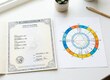
Generates your natal chart positions based on birth date, time, and location.
Try our Birth Chart Calculator free, here on this site →The Twelve Houses Explained
Each of the twelve houses in an astrology chart governs a specific part of life. The houses are numbered anticlockwise, starting from the left side of the chart. Here is what each one traditionally represents:
- First House: The House of Self. This is considered the most significant house. It relates to your outward personality, physical appearance and the impression you make on others. The sign on the cusp of this house is your rising sign or ascendant, which sets the pattern for all the other houses in your chart.
- Second House: Money and Possessions. This house covers your finances, material goods and sense of security. It may indicate your attitude towards earning, spending and what you value in a practical sense.
- Third House: Communication. Governing speech, writing and everyday interactions, this house also relates to siblings, neighbours and short journeys. It reflects how you process information and express your thoughts.
- Fourth House: Home and Family. This house concerns your roots, upbringing and domestic life. It can point to your relationship with parents and your need for emotional security.
- Fifth House: Creativity and Pleasure. Romance, children, hobbies and self-expression fall here. This house is often associated with joy, leisure and what brings you a sense of fun.
- Sixth House: Health and Daily Routine. Work habits, physical wellbeing and day-to-day responsibilities are the focus. This house can reflect your approach to looking after yourself and managing practical tasks.
- Seventh House: Partnerships. Marriage, business partnerships and close one-to-one relationships belong to this house. It often describes what you seek in a partner and how you handle commitment.
- Eighth House: Transformation and Shared Resources. This house deals with joint finances, inheritance and deeper emotional bonds. It is also linked to themes of change, loss and renewal.
- Ninth House: Belief and Exploration. Higher education, long-distance travel, philosophy and personal beliefs are governed here. This house relates to how you seek meaning and broaden your horizons.
- Tenth House: Career and Public Image. Your profession, reputation and ambitions fall into this house. It can indicate how you are seen in public life and what you strive to achieve.
- Eleventh House: Friendships and Groups. This house covers social circles, community involvement and long-term hopes. It reflects the role groups and networks play in your life.
- Twelfth House: The Inner World. Often described as the house of the subconscious, it relates to solitude, hidden matters and spiritual life. This house may highlight what you keep private or struggle to face openly.
Your situation may be slightly different. ask a question below ↓ and our editorial team will reply with our advice.
How a Chart Is Calculated
To draw up an accurate chart, you need three pieces of information: your date of birth, the exact time you were born and the location of your birth. The time matters because the houses shift roughly every two hours, so even siblings born on the same day can have quite different charts.
Most people in the UK can find their birth time on their original birth certificate. If you do not have this to hand, you can request a copy from the General Register Office or the relevant office in Scotland or Northern Ireland.
Once you have these details, many websites and apps can generate a chart for free. The chart will show which zodiac signs fall into each house and where the planets were positioned. From there, interpretation begins: astrologers look at the combinations and patterns to build a picture of your personality and potential life themes.
Using Your Chart
Reading an astrology chart takes practice. Most people start by learning their sun sign, moon sign and rising sign, as these three placements are considered the core of your astrological profile. The sun sign reflects your basic identity, the moon sign relates to your emotional nature, and the rising sign shapes how others see you.
Beyond these basics, you can explore which planets sit in which houses and what aspects, or angles, they form with each other. Some find this a useful tool for self-reflection, while others enjoy it purely for entertainment.
If you want a detailed reading, consulting a professional astrologer can help. Many offer sessions online or in person across the UK. As with any form of guidance, it is worth approaching astrology with an open but balanced mindset.



Ask Explore Astrology a question
Ask our editorial team a question and we will reply with our advice. Tell us as much about your situation as you can: the more detail you give, the more useful our answer can be.
You do not need to use your real name. Please do not include your full address, phone number, email address, or the names of other people. We may edit or remove identifying details for privacy and legal reasons.
Comments are moderated before publication.